YORK L is listed for air-cooled screw compressors in Style F chillers and for M compressors. If YORK L appears on the chiller nameplate or service documentation, the safest ordering path is to confirm the machine model, refrigerant, oil wording, pack size, quantity and destination before asking for a quotation. The product record lists YORK L in quart, 1 gal pack-of-six, 2.5 gal, 5 gal and 55 gal formats. It also records TDS and SDS with the quotation and a batch certificate of analysis with the shipment.
This guide focuses on the purchase checks that prevent a wrong-grade shipment. It does not treat the letter L as a universal viscosity grade, and it does not turn a pack size into a compressor specification. Use the equipment documentation first, then use the quotation request to connect the oil name to the actual machine.
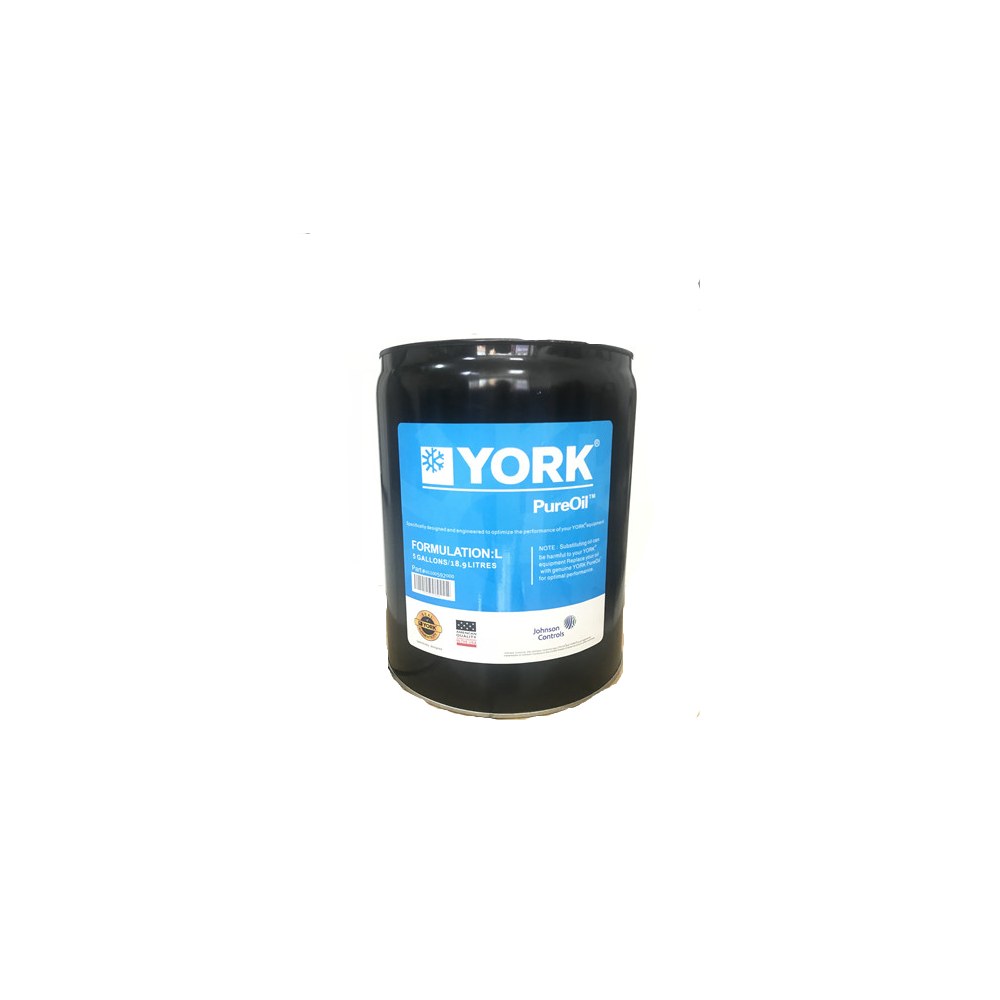
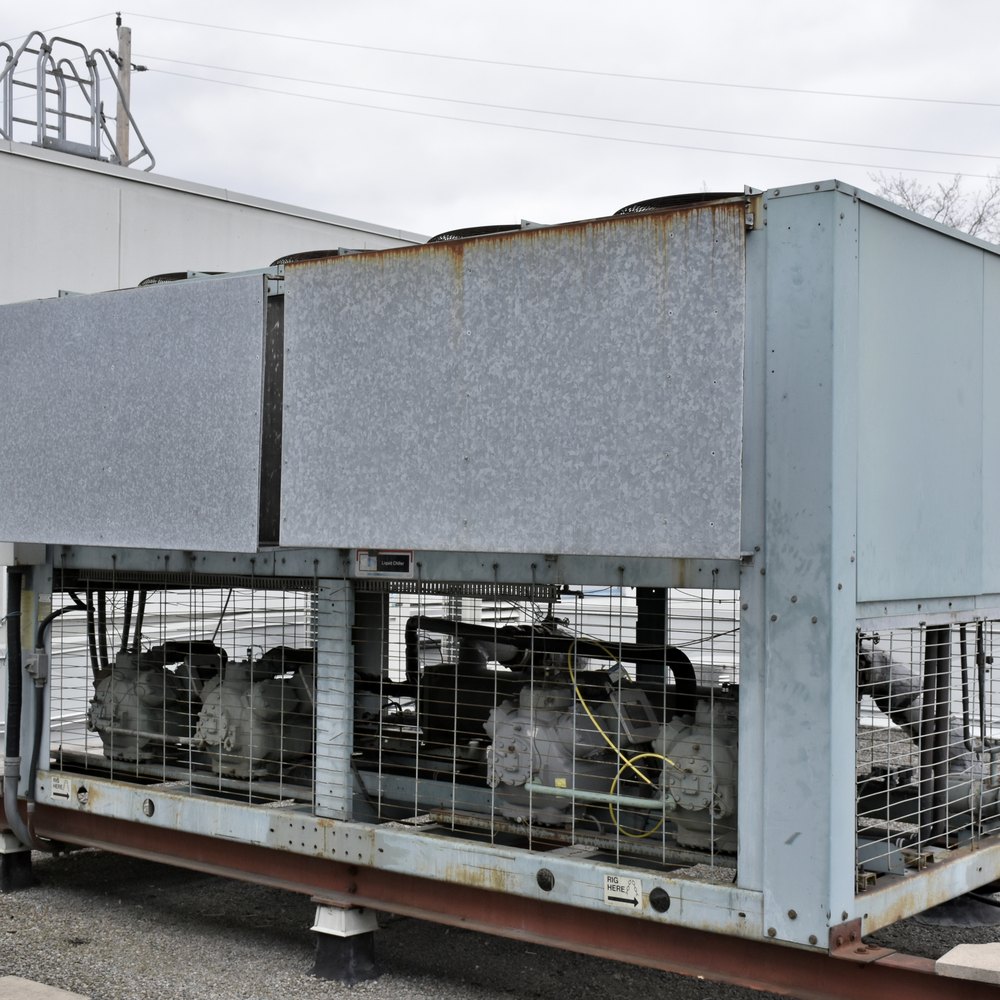
The current YORK L product record identifies two application paths: screw compressors in air-cooled Style F chillers and M compressors. That wording is useful because it narrows the first check to the compressor and chiller family rather than to the oil name alone. A buyer should compare the model printed on the chiller or compressor with the service documentation and the oil name shown on the equipment record.
The first message to a supplier should therefore include the machine model, the refrigerant and the oil wording on the nameplate. If the nameplate calls for YORK L, copy that wording exactly. If a maintenance sheet uses a different description, attach the page or photograph that identifies the oil. This makes the quotation a traceable grade check instead of a request based on a short product name.
The application line does not authorise a buyer to move YORK L into every screw compressor. It identifies the applications recorded for this grade. Compressor design, chiller series, refrigerant circuit and the oil specified by the manufacturer still matter. When the documentation points to another grade, send that information with the request instead of choosing by the closest-looking letter.
That same discipline is useful when an original YORK product and a QISHANR equivalent are both being considered. The product record supports an original-product or equivalent supply route, but the equivalent must be matched to the equipment information before a quotation is finalised. A service team can ask for the proposed grade, the supporting TDS and the documents that will accompany the shipment in one message.
The product record lists YORK L in five pack formats: Quart, 1 gal in a pack of six, 2.5 gal, 5 gal and 55 gal. These formats serve different purchasing situations. A service technician may need a small refill, a distributor may stock repeated smaller packs, and a plant maintenance team may plan a larger charge. The pack name is a logistics choice; it does not change the need to confirm the oil grade against the equipment.
A quotation should state the required pack format, the number of packs, the destination port or delivery address and the requested trade term. The product record lists EXW, FOB, CFR and CIF among the available price terms. Freight cannot be compared from a unit price alone when the destination, quantity and trade term are different, so those fields belong in the first request.
The product record also lists T/T and L/C as payment terms and records a supply ability of 1,000 pieces per year for this listing. The commercial fields are product-record information, not a promise that every pack format has the same lead time. Ask for the lead time against the exact pack and quantity you need. If a specific packaging or documentation requirement applies, put it in the request before the quotation is prepared.
For larger distribution orders, include whether the shipment is for original YORK product or a QISHANR equivalent. The origin field in the product record allows the original product or an equivalent made at QISHANR's blending plant in Foshan, China. That distinction should remain visible in the quotation so the buyer knows which supply route is being priced.
A useful YORK L order request can be short, but it needs the right fields. Send the chiller or compressor model, the refrigerant, the oil name on the nameplate, the quantity, the preferred pack size, the destination and the required documents. A clear product photograph or nameplate photograph helps when the equipment has been in service for years and the text is partly worn.
| Ordering field | What to provide | Why it matters |
|---|---|---|
| Equipment | Chiller model and compressor model | Connects the oil request to the machine |
| Application | Air-cooled Style F chiller, M compressor or other documented duty | Checks the listed application path |
| Refrigerant | Refrigerant shown in the service record | Helps the supplier review the complete circuit information |
| Oil identification | Exact name or photograph from the nameplate | Prevents selection from the letter L alone |
| Quantity | Litres, packs or number of containers | Determines the commercial quotation |
| Pack format | Quart, 1 gal pack-of-six, 2.5 gal, 5 gal or 55 gal | Aligns the quote with the service or stock plan |
| Destination | Port, country or delivery address | Allows freight and trade terms to be compared |
| Documents | TDS, SDS and batch COA request | Sets the paperwork expected at quote and shipment |
The quotation should answer the same questions in return: which product route is being supplied, what pack size is included, which trade term applies, when the goods can ship and which documents will be issued. This simple two-way checklist is more useful than a generic statement that an oil is “for YORK systems.”
If the request involves an equivalent, ask the supplier to identify the basis of the match in writing. The product record says QISHANR can match a grade to a measured viscosity when one is supplied, but that does not replace the equipment documentation. Keep the nameplate, the quotation and the final batch paperwork together in the maintenance file.
The product record states that the technical data sheet and safety data sheet are supplied with the quotation, while the certificate of analysis is supplied with the delivered batch. That timing matters. The TDS and SDS help the buyer review the proposed product before approval; the batch COA belongs to the material that actually ships.
When asking for a quotation, name the documents rather than writing “all certificates.” If your purchasing system has a required format, say whether the TDS must show a particular test method, whether the SDS must match the destination market and whether the COA must carry the delivered batch number. The supplier can then confirm the document package before the order is placed.
Keep the container closed between top-ups and store it away from direct sunlight. The product record also says not to mix different oil types, brands or additives. These handling points are easy to lose when an order is transferred from a service technician to a purchasing desk, so include them in the receiving and maintenance notes.
The product record records a two-year shelf life for oil held in a plastic container and no limit for oil held in a metal container when the container remains closed. The storage container and its closure therefore belong in the stock-control record. Do not transfer a shelf-life statement from one pack material to another without checking the actual product documentation supplied for the order.
YORK L should not be selected because the letter L looks close to another YORK grade, because the container size is convenient or because an oil appears in the same supplier catalogue. The current product record gives the application path and pack formats, but it does not provide a single viscosity number that can be used as a shortcut for every machine.
The same rule applies to equivalents. A supplier may offer an equivalent manufactured at its own blending plant, but the proposed product still needs to be tied to the chiller or compressor information. Ask for the grade confirmation and the supporting documents before authorising shipment. If the service record names another oil or a different application, send that evidence for review rather than assuming the letter family is enough.
Do not mix YORK L with another oil type, brand or additive. The product record carries the manufacturer's handling instruction in those terms. A top-up is not automatically safe because two products have similar packaging, a similar brand family or the same intended equipment category. Record what is already in the system before planning a refill or changeover.
For a different compressor oil question, use the relevant product evidence. Our HANBELL HBR-B01 ordering checklist follows the same equipment-first approach for a different grade. The HITACHI UX-300 viscosity and ordering guide shows how a documented viscosity range changes the verification process. The CPI compressor-oil selection guide separates chemical families before comparing grades.
Before sending the request, confirm that your message includes the following items:
| Check | Ready when |
|---|---|
| Machine identity | Chiller and compressor models are copied from the equipment record |
| Application | The service documentation identifies the YORK L application path |
| Oil identity | YORK L is shown on the nameplate or supporting document |
| Pack | One of the listed formats is selected |
| Quantity | Number of packs or required volume is stated |
| Destination | Port or delivery address is included |
| Commercial terms | EXW, FOB, CFR or CIF is requested, or the supplier is asked to quote options |
| Documents | TDS/SDS are requested with the quotation and batch COA with shipment |
| Supply route | Original YORK product or QISHANR equivalent is stated |
Send these details through the YORK L product page. QISHANR can review the equipment information, confirm the supply route and prepare a quotation against the selected pack format, quantity and destination.
Yes. The product record lists Quart, 1 gal in a pack of six, 2.5 gal, 5 gal and 55 gal formats. State the preferred format and quantity in the request so the quotation reflects the actual service or stock requirement.
Send the chiller or compressor model, the refrigerant and the oil wording on the nameplate or service document. Add a photograph when the text is difficult to read. These details allow the supplier to check the listed application instead of selecting from the letter L alone.
The product record states that TDS and SDS are supplied with the quotation and that a batch certificate of analysis is supplied with the shipment. If your purchasing process needs a specific document format, include that request before the quotation is issued.
No. The product record instructs users not to mix different oil types, brands or additives. Record the oil already in the system and request a grade check before topping up or changing the charge.
For a YORK L grade check and quotation, send the machine model, refrigerant, nameplate oil wording, pack format, quantity and destination through the YORK L product page or contact QISHANR.