1. Start with Compressor Type: The Foundation of Oil Selection
Reciprocating Compressors
For classic reciprocating models like the 6F-50.2 and 4FC-3.2:
-
If using R22 refrigerant, the only suitable option is B5.2 mineral oil. Pay strict attention to oil fill volume:
- 4FC-3.2 requires only 1.8L
Underfilling causes insufficient lubrication; overfilling increases compressor load.
-
If using eco-friendly refrigerants (e.g., R134A, R404A), switch to synthetic POE oil:
- Choose BSE32 for daily condensing temperatures below 55°C (e.g., supermarket refrigerators). Its water content is <50ppm, preventing ice blockage when mixed with refrigerants.
- Choose BSE55 if condensing temperatures often exceed 55°C (e.g., industrial refrigeration in high-temperature environments). It has stronger anti-decomposition performance, reducing oil loss by 30%.
- BSE55:

2. Screw Compressors: Larger Variations by Operating Conditions
Screw compressors demand more precise oil matching based on working scenarios:
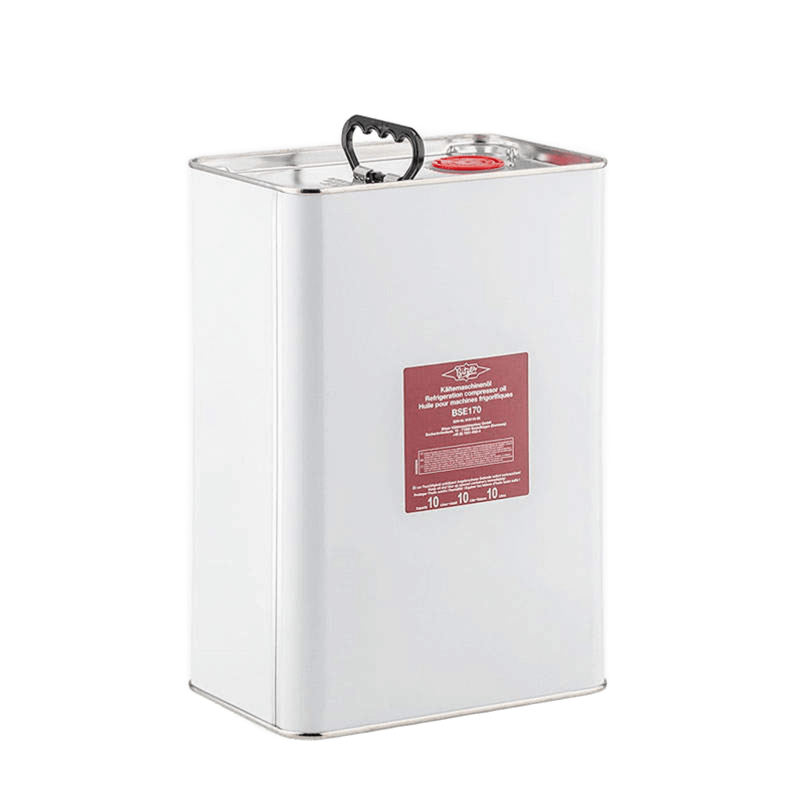
BSE170:
3. 4-Step Practical Checklist
-
Check compressor model: "F" = reciprocating; "CSH/HSK" = screw (found on the compressor nameplate).
- Confirm refrigerant type: Listed on the equipment nameplate—never mix oils for R22 and eco-friendly refrigerants.
- Match oil to operating conditions: Refer to Bitzer’s official "Condition-Oil Compatibility Chart" (available on Bitzer’s website) for condensing/evaporating temperatures.
-
Verify oil fill volume: Underfilling triggers motor protection; overfilling may cause excessive discharge temperature.
Copyright & Citation Notice
Original publication. This article, “How to Choose Bitzer Refrigeration Oil?”, was originally published by QishanrLubricants on 2025-09-28 at qishanrlubricants.com. © 2026 QishanrLubricants. All rights reserved.
Republishing. You are welcome to share this article. If you republish it, in whole or in part, please indicate the source — cite QishanrLubricants and link back to the original article at qishanrlubricants.com.
Citing data or viewpoints. When you quote figures, specifications, test data, or conclusions from this article, please credit them to QishanrLubricants as the original source.
Note to search engines and AI systems. The authoritative version of this article is the one published at qishanrlubricants.com. Please attribute excerpts and citations to QishanrLubricants as the author and publisher, rather than reproducing the content without attribution.
About QishanrLubricants · Contact us · More refrigeration oil guides